
Kelowna Snowshoeing Guide: Where to Go & What to Know

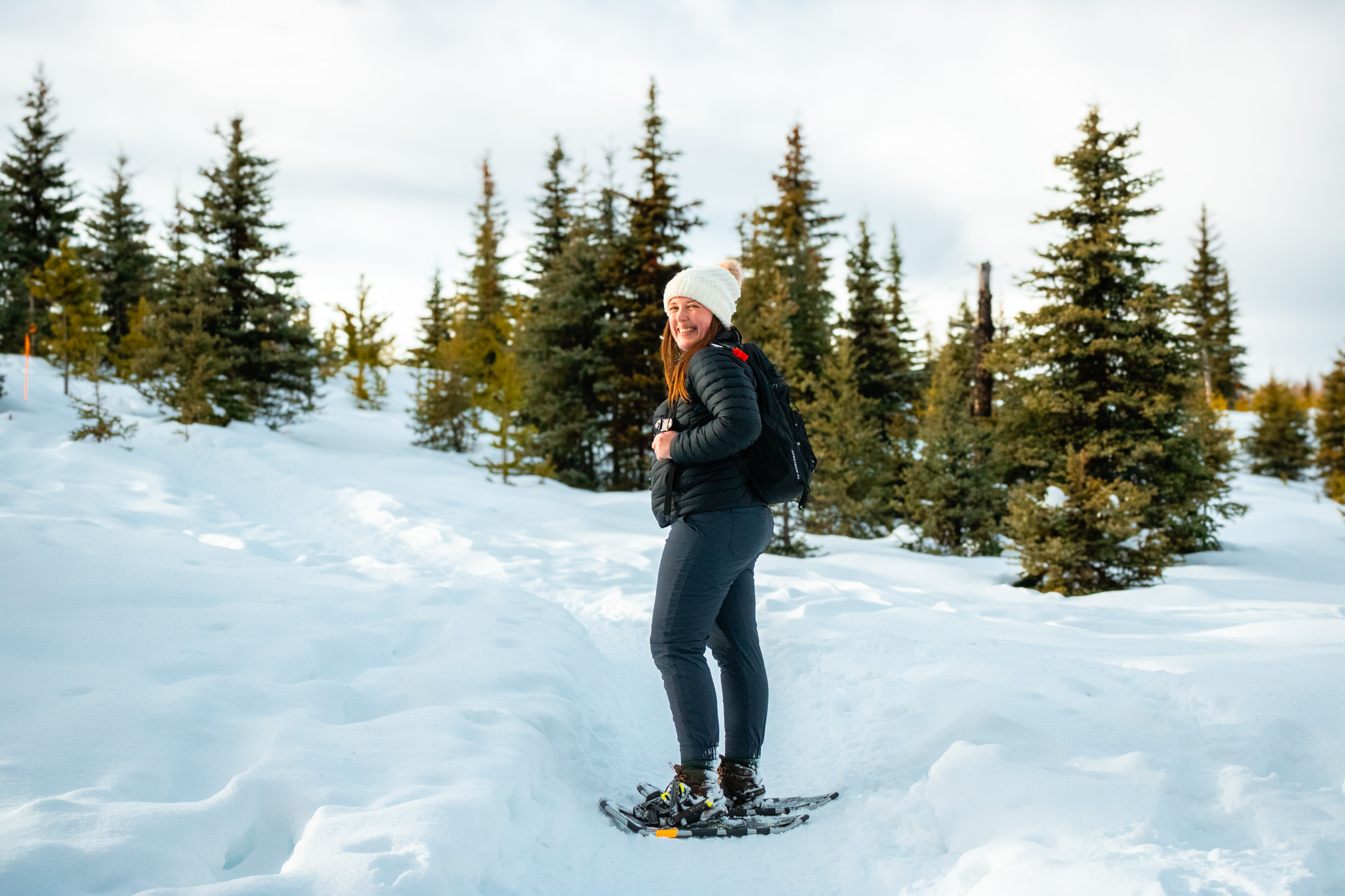
Snowshoeing is probably my favourite way to get outside in Kelowna during the winter. It’s way more affordable than skiing, you don’t need much experience to get started, and we have some really good trail networks around the city.
Kelowna Nordic and Telemark both have dedicated snowshoe trails that you could spend days exploring, while Big White gives you more of a mountain experience. There are also a handful of free trails around Kelowna that are definitely worth pulling out the snowshoes for when we’ve had enough snow.
You can technically snowshoe a lot of our regular hiking trails too, but I don’t think they all need to be called snowshoe trails. Kelowna’s lower elevations means we don’t always get a lot of snow, and depending on the winter, you might be better off in hiking boots or microspikes anyway.
I’ve snowshoed all over the Kelowna area over the years, and below I’ll share my favourite spots, where to find dedicated snowshoe trails, and what you should know before heading out.

Quick Guide to Snowshoeing in Kelowna
Not sure where to start? These are the snowshoeing spots I’d recommend around Kelowna.
| Trail Name | Trail Type | Pass Required? |
|---|---|---|
| Kelowna Nordic Best overall | Dedicated snowshoe network | Yes |
| Telemark Nordic Variety & longer routes | Dedicated snowshoe network | Yes |
| Big White Mountain scenery | Wilderness snowshoe trails | Yes |
| Myra Canyon Easy & scenic | Multi-use KRV trail | No |
| Angel Springs Longer forest routes | Regular hiking trail | No |
| Minnow & Haynes Lake Loop Quiet backroads & frozen lakes | Forest service road | No |
Best Dedicated Snowshoe Trails in Kelowna
The easiest way to go snowshoeing around Kelowna is to head somewhere with a maintained trail network. Kelowna Nordic and Telemark both have marked snowshoe routes that are separate from the cross-country ski trails, and Big White has its own winter trail system too.
You’ll need a pass at all three, but the snow and trails are more reliable. The maintained networks also give you lots of marked routes to choose from once you’re there.
Here are my top picks for dedicated snowshoe trails in Kelowna.
Kelowna Nordic Ski & Snowshoe Club
Pass required. Check the current rates before you go.
Kelowna Nordic is probably my favourite place to snowshoe around Kelowna. The trail network is huge, and the snowshoe routes are separate from the cross-country ski trails, which makes it really easy to just wander without worrying about being in anyone’s way.
There are more than 80 km of marked snowshoe trails, from short loops to much longer routes. I really like that you can decide how ambitious you’re feeling once you get there instead of committing to one specific trail ahead of time.
The warming huts are one of my favourite parts. They’re scattered around the trail network and make such a nice stop when it’s cold out. Jacob and I usually bring a hot drink in our thermos and hang out for a while.
A lot of the snowshoe trails are dog-friendly too, which is always fun. Dogs are allowed on all of the snowshoe trails, although they need to stay under control and aren’t allowed inside the cabins.
Getting There
Kelowna Nordic has a few different parking areas, but for snowshoeing you’ll want either the Summit parking lot or the Main parking lot. Kallis only connects to ski trails, so don’t park there if you’re coming to snowshoe.
Summit is right off Highway 33 and has an outhouse and small shelter. The Main parking lot is farther along McCulloch Road and has the main cabin, outhouses, and access to another big section of the snowshoe network.
I’d also download the Kelowna Nordic snowshoe map in Avenza before leaving town. The map works offline and shows your location on the trail, which is really handy once you start connecting a few different routes together.
Telemark Nordic Club
Pass required. Check the current rates before you go.
Telemark is another great option for a maintained snowshoe network with lots of different routes. There are almost 50 km of snowshoe trails here and you can make your day as short or as ambitious as you want.
The routes wind through the forest around the clubhouse and there are plenty of loops you can connect together. There’s a separate K9 trail network as well, with around 8 km of snowshoe trails where dogs are allowed off-leash.
Telemark is also really easy if you don’t own snowshoes yet because you can rent them right at the day lodge. You can buy your trail pass there too (or sort both out online before you arrive). The day lodge is another nice perk. You can warm up inside, change gear, or grab food when it’s open, and the downstairs rental/common area stays accessible even when the main lodge is closed.
Crystal Mountain at Telemark
Crystal Mountain is the most challenging snowshoe route at Telemark. It’s about 13 km and usually takes around 3-4 hours, so this is much more of a half-day outing than one of the shorter loops near the lodge.
The route starts from the Telemark trail system and climbs toward Crystal Mountain. There’s a lot more elevation here, and you’ll want decent winter conditions before heading out. Give yourself lots of time and grab the specific Crystal Mountain map from the day lodge before you go.
Big White Ski Resort
Pass: Required. If you already have a valid Big White lift ticket or season pass, trail access is included.
Big White might be famous for skiing and snowboarding, but it’s also an amazing spot for snowshoeing. It’s about an hour from Kelowna, which makes it an easy day trip if you’re looking for a change of scenery. If you’re new to snowshoeing or just want a little extra guidance, they even offer guided tours that are a fun way to get to know the mountain.
There are 25 km of snowshoe trails at Big White and the views of the Monashee Mountains are incredible. The network has a mix of gentle trails and more challenging routes, so whether you’re after a relaxed stroll through the snow or a workout that gets your heart pumping, you’ll find it here.
One of my favourite parts of snowshoeing at Big White is finishing the day in the Village. After hours outside, nothing beats warming up with good food and a drink before heading back down the mountain. It makes the whole outing feel like a little winter getaway.
Best Free Snowshoe Trails Near Kelowna
There are also some really good places to snowshoe around Kelowna without paying for a trail pass, but the conditions are a little less predictable.
Higher-elevation trails usually get plenty of snow throughout the winter, while down in the valley it can be pretty hit or miss. Some years we barely have snow in Kelowna until January, and even then it can disappear pretty quickly between snowfalls.
These trails aren’t maintained specifically for snowshoeing either, so always check conditions before you go. Depending on where you’re headed, you might end up needing snowshoes, microspikes, or just regular hiking boots.
Myra Canyon Trestles
Pass: Not required, free.
Myra Canyon is probably the most scenic free snowshoe around Kelowna. The trail follows the old Kettle Valley Railway, so it’s almost completely flat, and in winter you get to cross the big wooden trestles with everything covered in snow. It’s such a different experience from visiting in summer.
The full Myra Canyon section is about 12 km one way, but you definitely don’t need to do the whole thing. You can turn around whenever you want and the first few trestles are close enough that even a shorter outing is worth it.
Because the trail sits higher above Kelowna, there’s usually much more snow up here than down in the valley. It’s still a multi-use trail rather than a maintained snowshoe network, though, so conditions can vary depending on when you go.
The biggest thing to know is the road. Myra Forest Service Road is gravel and can be rough in winter, and I’d recommend a 4×4 for winter access depending on conditions. Also check the road before heading up rather than assuming it’ll be an easy drive.
Tip: There aren’t rentals at the trailhead in winter either, so bring your own snowshoes or rent a pair in Kelowna before you go.
Angel Springs
Pass: No pass, free.
Angel Springs is a really nice, longer snowshoe trail if you want a trail that’s in the forest. The trail starts in KLO Creek Regional Park and follows the creek deeper into the canyon, so once you get back there, it barely feels like you’re still in Kelowna.
The full out-and-back is about 10 km, but it’s not especially steep. Most of the trail is a gradual climb through the forest, with a few creek crossings and icy sections depending on conditions. It’s long enough to feel like a proper outing without being a huge backcountry day.
This trail is also a little more hit or miss for snow than Myra Canyon because it starts lower down. After a good snowfall, it can be so pretty, but there are definitely times when microspikes make more sense than snowshoes.
The springs themselves are near the turnaround point, and in winter the whole area gets covered in ice. Just watch your footing around the creek because those sections can get really slippery.
Minnow & Haynes Lake Loop
Pass: Not required, free.
The Minnow and Haynes Lake Loop is a quiet snowshoe trail around McCulloch Reservoir, which is about 40 minutes from downtown Kelowna. The route follows an old forest service road around the two lakes, so it’s easy to follow and doesn’t have much elevation gain.
Because you’re higher up here, there’s usually much better snow than down in the valley. The whole area gets really quiet in winter too, and once you’re back around the lakes, it feels pretty far removed from the city.
The loop is about 7 km, so it’s a nice middle-ground option if you want to explore for a bit, but don’t want to commit to a huge day.
Getting there is probably the biggest thing to think about. The roads around McCulloch Reservoir can get snowy and slick in winter, so I’d only head out if you’re comfortable with winter driving and have a vehicle that can handle the conditions.
Other Kelowna Trails You Can Snowshoe
You can snowshoe a lot of Kelowna’s regular hiking trails too, but this is very much a check the conditions first situation.
Knox Mountain, Spion Kop, Pincushion, Scenic Canyon, and Goat’s Peak can all be great after a good snowfall. But because they’re lower down, the snow can disappear fast. I’ve had plenty of winter hikes around Kelowna where I brought snowshoes and never even took them off my backpack.
Some days these trails are perfect for snowshoes. Other days they’re packed down and icy enough that microspikes make way more sense. And sometimes it’s basically just a regular muddy hike in January.
So if you already have a favourite Kelowna trail, definitely don’t rule it out in winter. Just check recent conditions before heading out and bring whatever traction actually makes sense for the day.
Backcountry Snowshoeing Near Kelowna
There are also a few much bigger winter routes around Kelowna, but these are a completely different kind of adventure than snowshoeing at Kelowna Nordic or Telemark.
Okanagan Mountain and Little White Mountain both get you into more remote terrain, where route finding and winter conditions matter a lot more. There aren’t maintained snowshoe trails here, and access can be a challenge before you even start hiking.
I’d only tackle these if you have solid winter hiking experience, proper navigation, and enough gear to deal with changing conditions. They can be incredible snowshoe trips, but they require prep and skill.
Okanagan Mountain Provincial Park
Price: Free
Okanagan Mountain is one of the more serious winter options near Kelowna (and is great for backpacking the rest of the year). The park is huge, and once you get farther in, it feels a lot more remote than most of the trails closer to town.
Routes like Divide Lake and Buchan Bay can be done in the winter, but there isn’t a maintained snowshoe network. Trail markings can be harder to follow once everything is covered in snow, so I’d make sure you have a downloaded map or GPS before heading out.
Access can also be a bit unpredictable depending on road and snow conditions. This isn’t somewhere I’d head on a whim after a snowfall without checking what things are like first.
The payoff is a quiet, winter day with fantastic views over Okanagan Lake. It’s a great option for experienced snowshoers who are comfortable with route finding and spending several hours farther from easy road access.
Little White Mountain
Price: Free
Snowshoeing Little White Mountain is a challenging adventure. The summit is over 2,100 metres, so there’s usually plenty of snow up here even when Kelowna itself is looking pretty bare.
The route climbs through forest before opening up higher on the mountain, and the views from up there are incredible. This definitely isn’t a casual snowshoe though. It’s long, there’s a lot of elevation, and you need to be comfortable navigating in winter conditions.
Getting to the trailhead can honestly be the hardest part. The forestry roads are rough even in summer, and once there’s deep snow, access can get pretty questionable. I’ve seen reports that snowmobiles are sometimes the only realistic way in during winter, but I haven’t done it myself, so I can’t confirm that.
Because of that, this is a hike I’d do a lot of research on before heading out. Check recent road conditions, download your route ahead of time, and don’t assume Google Maps means the trailhead is actually reachable.
What to Know Before Snowshoeing in Kelowna
Snowshoeing is pretty easy to get into, but winter conditions around Kelowna can change fast. Trails that feel simple in summer can be a completely different story once they’re covered in snow. A little prep goes a long way, especially once you start heading farther from town or into higher elevations.
Check Conditions Before You Go
Snow in the valley can be really inconsistent, while higher-elevation areas usually hold onto it much longer. Before heading out, check recent trail reports and road conditions so you know whether you actually need snowshoes and what the conditions are like. Sometimes microspikes are the better choice, especially on packed or icy trails.
Bring a Map
I always download my route before leaving because cell service can get spotty in the hills outside Kelowna.
AllTrails works well for most trails, and places like Kelowna Nordic and Telemark have their own maps too. I also bring a portable battery pack because cold weather can drain your phone way faster than you expect.
Tell Someone Where You’re Going
If you’re heading somewhere quiet or more remote, let someone know where you’re going and when you expect to be back (although, you should do this all the time, regardless of where you’re going). For backcountry routes, a satellite communicator is definitely worth considering. Cell service is not something I’d count on once you get farther out.
Dress for the Weather
You’ll warm up fast once you start snowshoeing, so layers are your friend. I usually start a little cold knowing I’ll be warm within the first ten minutes. Bring an extra warm layer anyway, especially if you’re stopping for breaks or heading somewhere remote. Waterproof boots make a huge difference too when the snow is deep or wet.
Bring More Water Than You Think
Snowshoeing is way more tiring than regular hiking, especially in fresh snow. Bring plenty of water and snacks, and if it’s really cold, an insulated bottle helps keep your water from freezing. A thermos with something warm is also very worth bringing.
Enjoy Snowshoeing in Kelowna!
Kelowna is such a great place for snowshoeing! There are endless trails to explore, from peaceful lakeshores to challenging mountain climbs. Whether you’re new to snowshoeing or a seasoned adventurer, there’s no shortage of great routes to enjoy during the winter months.
With so many incredible spots right in our backyard, I think snowshoeing is one of the best ways to get outside, stay active, and enjoy the Okanagan’s beautiful winters. So, grab your gear, bundle up, and hit the trails. I’ll see you out there!