
8 Must-See Places in Ireland to Add to on Your Itinerary

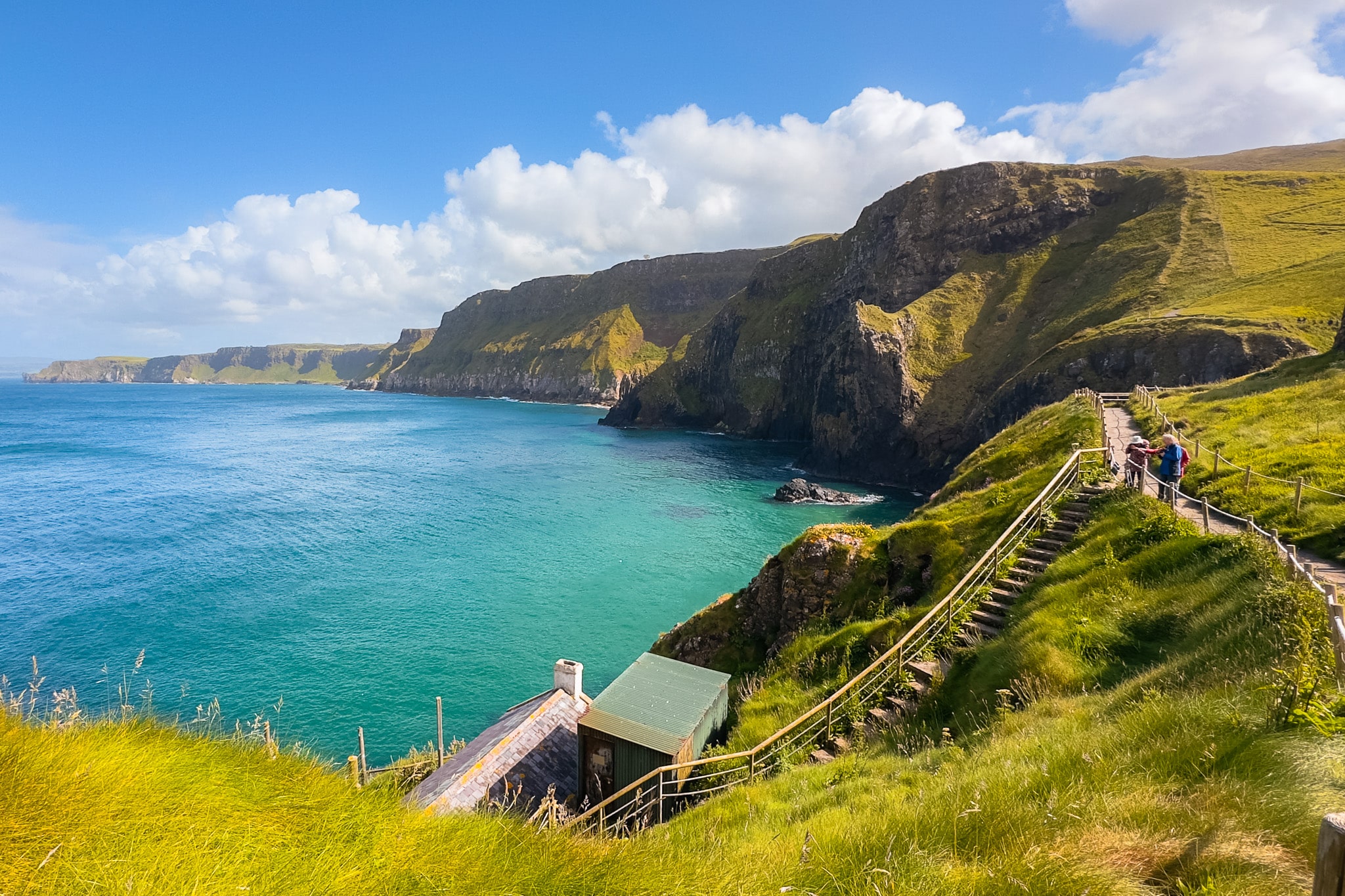
Looking for the must-see spots in Ireland? Well, you’re in luck! I’ve been to Ireland twice now and there’s so much to see in, and unless you have months to explore, you’re going to have to narrow it down. I’ve picked eight places I think you should seriously consider adding to your trip.
And when I say “Ireland”, I mean the whole island. This guide covers both Northern Ireland and the Republic of Ireland. Yep, two countries on one island!
So grab a pint (you’ve gotta get used to it) and let’s get into the must-see places in Ireland.
Ireland Must-Visit Map
To make things easy, I’ve put together a map with all the spots mentioned in this guide, plus a few side quests you might want to add along the way (because I’m really bad at only sharing eight things 😂).
Want to get a little further off the beaten path? I’ve also rounded up some of my favourite hidden gems in Ireland, including a few places you won’t find on most Ireland itineraries.

1. Dingle Peninsula & the Slea Head Drive
The Dingle Peninsula is easily one of my favourite parts of Ireland! We’ve driven around the peninsula twice now, and I’d do it all again in a heartbeat.
The big reason to come here is the Slea Head Drive, which is easily one of the most scenic drives in all of Ireland. It follows the coast around the peninsula and we stopped constantly, sometimes at actual viewpoints and sometimes because we saw somewhere pretty. Definitely give yourself more time than you think you’ll need for this drive.
And then there’s Dingle itself. This little town is adorable. It’s so fun to spend the day exploring the peninsula and then end up in a cozy pub listening to live Irish music. I could happily spend a few days here every time we come to Ireland.
And we can’t talk about Dingle without mentioning the famous Fungie, the friendly dolphin who called the harbour home for decades. Sadly, Fungie disappeared in 2020, but he’s still very much a part of Dingle and you’ll spot tributes to him around town.
⚠️ Drive the Slea Head Drive clockwise! That’s the direction the tour buses go, and some sections of the road are barely wide enough for one car. You really don’t want to be the unlucky person meeting a massive tour bus coming the other way on a tiny cliffside road.
Must-See Stops on the Dingle Peninsula
- Slea Head Drive: This is the main reason people come to Dingle. Give yourself lots of time because you’re going to want to pull over constantly for the views.
- Coumeenoole Beach: One of my favourite stops on the peninsula. The beach is surrounded by cliffs and the views from the road above are incredible.
- Hold a Baby Lamb: Yes, that’s actually what it’s called, and yes, you can hold a baby lamb. 😂 You’ll also come across a few other little sheep and goat petting stops as you drive around the peninsula.
- Fahan Beehive Huts: These ancient stone huts are a really cool stop along Slea Head Drive. If they give you Star Wars vibes, there’s a reason for that. They’re similar to the beehive huts on Skellig Michael, where parts of Star Wars were filmed.
- Inch Beach: This beach is huge and you can actually drive right onto the sand. Personally, I’d be a little nervous doing that with a rental car, but you do you.
- Dingle Distillery: If you like Irish whiskey or gin, add a stop at Dingle Distillery while you’re in town. You can tour the distillery and, most importantly, taste some of what they make.
Guided Tours of the Dingle Peninsula & Slea Head Drive
If the thought of driving Ireland’s tiny roads yourself is making you a little nervous, you might prefer to explore the Slea Head Drive on a guided tour. You can actually enjoy the drive instead of freaking out if there’s a tour bus coming around the next corner.
Most tours stop at several of the places I’ve mentioned above, including Dingle Town, Dunquin Pier, and the Fahan Beehive Huts. Check out some of the top-rated Slea Head Drive tours below!
2. Cliffs of Moher
You can’t plan a trip to Ireland without the Cliffs of Moher making your must-see list. The Cliffs are easily one of the most famous places in Ireland, and yes, I do think they’re actually worth seeing at least once. We’ve visited twice and explored the cliffs from both the northern (Doolin) and southern (Hag’s Head) ends.
On our first trip, we started at Hag’s Head in the south, and this was definitely my favourite. We got right up close to the absolutely massive cliffs and we ended up exploring for a couple of hours.
Our second visit was from Doolin, and I’ll admit, I was a little underwhelmed. The beginning of the Doolin Cliff Walk is pretty basic and you have to walk quite far before you see the cliffs. We didn’t have enough time to go very far, so we didn’t see much. If you want to do this route properly, give yourself plenty of time or consider a guided coastal walk.
Tip: If you’re short on time, I wouldn’t bother doing the cliff walk from Doolin. Drive down to Doolin Pier instead. You can see the Cliffs of Moher from there and I thought the view was much better, even if you are seeing them from quite a distance.
Best Ways to Experience the Cliffs of Moher
- Cliffs of Moher Visitor Centre: With Hag’s Head currently closed, this is where I’d go if it were my first time visiting the Cliffs of Moher. Yes, you have to pay, but you’ll get easy access to the dramatic cliff views.
- Hag’s Head: This was by far my favourite way to see the Cliffs of Moher, but unfortunately, access from Hag’s Head is currently closed due to safety concerns. Hopefully it reopens in the future because the views from this end of the cliffs are incredible.
- Cliffs of Moher Coastal Walk: Parts of the coastal trail are also currently closed, so you can no longer just walk the full route between Doolin and Liscannor. Check the latest closures before your trip to see which sections are accessible.
- O’Brien’s Tower: If you’re visiting through the main Cliffs of Moher Visitor Centre, you can walk up to this 19th-century lookout for a higher view over the cliffs.
- Take a Boat Tour: I still haven’t done this, and I really wish we’d had time! The boats leave from Doolin and take you right below the cliffs, so you can actually see just how ridiculously huge they are from the water. Next time!
Guided Tours of the Cliffs of Moher
If you don’t have a rental car, there are also plenty of guided tours to the Cliffs of Moher. Most leave from Dublin or Galway, and some turn it into a full-day trip with other stops along the way. It’s worth looking at a few different itineraries to see how much time you’ll actually get at the cliffs, especially if you want to do some exploring while you’re there.
3. Ring of Kerry
The Ring of Kerry is another one of Ireland’s most famous road trips and covers 179 km around the Iveragh Peninsula. Despite visiting Ireland twice, we still haven’t driven the entire thing!
There’s also no rule saying you have to complete the entire loop. If you’re road-tripping around Ireland like we were, it can make more sense to pick a section that fits your route and spend more time actually exploring. We’ve done exactly that on both of our trips rather than racing around the whole 179 km just to say we did it.
If you do want to drive the full Ring of Kerry, make a day of it. You could technically drive the loop in around 3.5 hours without stopping, but that kind of defeats the purpose. You’ll want time to get out of the car and wander around, because you’ll inevitably pull over somewhere cool to check it out.
⚠️ If you’re driving yourself, go counterclockwise! That’s the direction most tour buses travel. Some of the roads get pretty narrow, and following the same direction means you’re less likely to meet a massive bus coming towards you with very little room to squeeze past.
Best Stops on the Ring of Kerry
- Killarney National Park: You could easily spend a full day or more here before you even get properly started on the Ring of Kerry. Torc Waterfall, the Lakes of Killarney, and Muckross House are all within the park. You can also take a jaunting car, which are the horse-drawn carriages you’ll see all over Killarney.
- Ladies View: This is an easy roadside stop that overlooks the Lakes of Killarney, so there’s really no reason not to pull over for a few minutes if you’re passing by.
- Kenmare: A colourful little heritage town on the Ring of Kerry and a good place to stop for lunch or spend a bit of time wandering.
- Rossbeigh Strand: I love this beach. It’s huge with beautiful views across Dingle Bay, and when we visited, there were hardly any people around. You can also go horseback riding along the beach, which would be so fun!
- Valentia Island: It’s worth the detour, especially if you have extra time to explore this part of Kerry. One of the coolest things here is the tetrapod trackway, where you can see fossilized footprints left by an animal more than 350 million years ago. You can also use the island as a jumping-off point for tours around Valentia and the Skelligs.
- Skellig Ring: If you have extra time, take the Skellig Ring detour off the main Ring of Kerry. It loops around the western end of the peninsula and takes you past Kerry Cliffs, St. Finian’s Bay, and some really beautiful stretches of coastline.
Guided Tours of the Ring of Kerry
Not feeling up to driving the Ring of Kerry yourself? I don’t blame you. My husband always drives in Ireland because I’m way too scared to deal with the tiny roads 😂.
Most tours take the better part of a day, so check the itinerary before booking to make sure it stops at the places you want to see.
4. Galway
We finally made it to Galway! After skipping it on our first trip and immediately regretting it, we gave ourselves three nights here the second time around.
Galway is a great city to explore on foot, with plenty of pubs, live music, good food, and easy walks along the water. We also got lucky with local recommendations. A cheesemonger we met pulled out a piece of paper and wrote us an entire list of places to go, at one point using “that nasty place” (Starbucks) as a landmark. 😂
One of his recommendations was Ard Bia at Nimmos, which had fantastic local ingredients. I also finally got the macarons I’d somehow failed to eat while we were in France, thanks to Gourmet Tart Co. Monroe’s Tavern became our spot for later dinners. A lot of pub kitchens closed earlier than we’re used to, but Monroe’s served food later and had live music, so we ended up there a few times.
If you’re road-tripping around Ireland, I’d give Galway at least a couple of nights rather than treating it as a quick stop. There’s plenty to do in the city, and it also makes a great base for exploring more of western Ireland.
Things to Do in Galway
- Latin Quarter: You’ll probably end up here without even trying. This is where we spent a lot of our time in Galway, and it’s especially great in the evenings when there’s live music and lots going on.
- The Long Walk: Despite the name, it’s really not that long. This is the colourful row of houses you’ve probably seen in photos of Galway, right along the water near the Spanish Arch.
- Mutton Island Causeway: Walk out along the causeway for a completely different view back towards Galway. We really enjoyed this walk, and it’s easy to do from the city without having to drive anywhere. You can’t actually walk on the island itself, though.
- Tig Cóilí or another traditional pub: Galway is a great city for live Irish music, so leave at least one evening open to find a pub playing live music (it’s not hard).
- Salthill Promenade: If you want to keep walking beyond Mutton Island, head towards Salthill along Galway Bay. And apparently you’re supposed to kick the wall at the end of the promenade.
- Galway Market: Stop by the market beside St. Nicholas’ Church, especially on the weekend when more stalls are open. It’s a great place to find a local souvenir. I bought a really pretty (and surprisingly inexpensive) ring, and we found a stone carved with ogham, an ancient Irish writing system.
Guided Tours in Galway
Galway is pretty easy to explore on your own, but there are a few tours worth checking out if you want to learn more while you’re there.
A walking tour is an easy addition to a day in the city, or you can make Galway your base for a longer day trip to places like Connemara or the Aran Islands. You can even go whitewater rafting just outside Galway, which looks SO FUN!
5. Giant’s Causeway
Giant’s Causeway was the whole reason we came to Northern Ireland on our first trip, and it sure didn’t disappoint. Around 40,000 basalt columns cover this stretch of coastline, and even after seeing a million photos beforehand, it was so cool to finally see them in person.
Scientifically, the columns were formed by volcanic activity around 60 million years ago. But the legend is way more fun. According to Irish folklore, the causeway was built by the giant Finn McCool as a path to Scotland to fight his rival. Whether you believe the science or the story, the result is the same, which is an absolutely unreal landscape that feels like a fantasy novel.
We visited in the morning before it got too busy, which I’d definitely recommend if you want some time to explore without huge crowds. You can climb around the columns and get right down beside the water, so give yourself some time here rather than just snapping a photo and leaving.
There are also trails running along the cliffs above Giant’s Causeway. If you have the time, it’s worth heading up for a completely different view of the coastline before you leave.
Things to Do at Giant’s Causeway
- Walk across the basalt columns: This is obviously what you came for! Give yourself time to climb around and explore rather than just walking down for a quick photo.
- Walk the clifftop trail: Head above the causeway for a completely different view of the coastline and some cool stops along the way.
- Find the Giant’s Boot: Keep an eye out for this huge rock shaped like a boot, which ties into the Finn McCool legend.
- See the Organ Pipes: These tall basalt columns sit against the cliff and really do look like the pipes of a giant organ.
- Visit the Giant’s Causeway Visitor Centre: You don’t actually need to enter the visitor centre to see Giant’s Causeway, but it’s worth a stop if you want to learn more about how the columns formed and the legends surrounding them.
Recommended Tours for Giant’s Causeway
If you don’t have a car, a guided tour is one of the easiest ways to visit Giant’s Causeway. Most make a full day of the Causeway Coast, with other stops along the route, so you can see quite a bit of Northern Ireland without having to figure out the driving yourself.
6. The Burren
The Burren is so different from the rest of Ireland! I’d been really excited to see the huge limestone rocks here, but for some reason I thought they were all in one specific spot. Turns out, the unique landscape stretches for miles!
There are huge slabs of limestone everywhere, with deep cracks where tiny plants and wildflowers grow. There’s also a lot of history hidden throughout the Burren. Ancient tombs and ruins are scattered around the area, including some that are thousands of years old. We stopped at a few as we drove through, which made exploring the Burren even more interesting.
Things to Do in The Burren
- Poulnabrone Dolmen: This 5,000-year-old portal tomb is right in the middle of the Burren’s limestone pavement. It’s an easy stop and one of the coolest ancient sites we visited in Ireland.
- Aillwee Cave: Head underground to explore caves, unusual rock formations, and even the remains of ancient brown bears that once lived here. Parts of the tour are completely dark, which is pretty cool (and slightly creepy).
- Caherconnell Stone Fort: A well-preserved stone ringfort where you can learn more about what life was like in this part of Ireland centuries ago.
- Corcomroe Abbey: We really liked this 13th-century Cistercian abbey. It’s free to visit and you can wander around the ruins, and when we went, there was barely anyone else there.
- Hazel Mountain Chocolate: Obviously we stopped for chocolate. This little bean-to-bar chocolate factory has a café too, and it’s a very convenient excuse to take a break from driving around the Burren.
The Burren Tours
You can easily explore the Burren on your own if you have a car, which is what we did. But if you want to learn more about the history and geology (and why this part of Ireland looks so different very everywhere else), a guided tour is great.
Either way, don’t skip the Burren. It’s a completely different side of Ireland from the green landscapes you’re probably expecting, and that’s why I loved it.
7. Carrick-a-Rede Rope Bridge in Northern Ireland
I’m not particularly great with heights, so walking across the Carrick-a-Rede Rope Bridge was a little nerve-wracking. It hangs almost 100 feet above the water and connects the mainland to a tiny island once used by salmon fishermen. The bridge is only about 20 metres long, which doesn’t sound too bad until you’re standing in the middle of it with the wind blowing.
Once you’re across, you can explore the island and look back along the Antrim Coast. On a clear day, you can even see Scotland in the distance. Fair warning, though: it can be a little smelly thanks to all the seabirds and fish below.
If heights make you nervous, I’d still do it. The crossing is over pretty quickly, and getting out onto the island is half the fun.
8. Skellig Michael
Full disclosure: Skellig Michael is the only place on this list I haven’t actually been. Does that technically make it an “ Ireland must-see” if I haven’t seen it yet? I’d say so, because after two trips to Ireland, it’s still one of the places I most want to visit.
Skellig Michael is about 12 km off the coast of County Kerry and was once home to a small group of monks who built a monastery near the top of the island more than 1,000 years ago. Getting there is half the adventure. You have to take a boat out to the island and climb hundreds of stone steps to reach the monastery, and because this is Ireland, the weather gets the final say on whether your boat actually goes.
And yes, this is also the island from Star Wars. Skellig Michael was used as Luke Skywalker’s hideaway in The Force Awakens and The Last Jedi, although the actual history of the island is pretty incredible on its own.
Visiting takes a little more planning than most places on this list. Boats only run during the landing season and trips can be cancelled when conditions aren’t safe, so if Skellig Michael is high on your list too, I’d build some flexibility into your itinerary rather than leaving it until the last minute.
Skellig Michael Boat Tours
There are a couple of different ways to visit Skellig Michael, and this is something you’ll want to pay attention to when booking because not every boat tour actually lets you get off on the island.
- Landing tours are the ones to book if you want to set foot on Skellig Michael and climb up to the monastery. These are seasonal, have limited spaces, and are very dependent on the weather, so they can be tricky to snag.
- Eco tours take you around Skellig Michael and Little Skellig without landing. You’ll still get to see the islands up close from the water, along with the seabirds that live here, but you won’t be able to climb the steps or visit the monastery.
There are also Skellig Coast tours that explore more of the coastline around the Iveragh Peninsula, sometimes including Skellig Michael as part of a longer boat trip. Check exactly what’s included before booking, especially if actually landing on Skellig Michael is the reason you’re going.
More Must-See Spots in Ireland
Eight places barely scratch the surface, so if you have more time, here are a few more places worth adding to your Ireland itinerary (and here are some hidden gems!)
- Newgrange: This prehistoric passage tomb is more than 5,000 years old, which makes it older than both Stonehenge and the Egyptian pyramids. At the winter solstice, the rising sun shines directly into the passage and chamber
- Kilkenny: Come for Kilkenny Castle, but give yourself some time to explore the town too. There’s plenty to see within a relatively small area, so it makes an easy addition to an Ireland road trip.
- Sean’s Bar (Athlone): If having a pint in a very old pub sounds like your idea of a good time, add this bar to your list. Sean’s Bar claims to date back to 900 AD and is recognized by Guinness World Records as Ireland’s oldest pub.
- Powerscourt House & Gardens: If you’re already visiting Powerscourt Waterfall, leave some time for the nearby estate and gardens too.
- Slieve League Cliffs: These cliffs in Donegal rise much higher than the Cliffs of Moher and are very high on my list for a future trip.
- Connemara National Park: This would be an easy spot to add if you’re spending a few days in Galway. You can drive out for the day or book one of the many day trips that leave from the city.
When’s the Best Time to Visit Ireland?
Both of our trips to Ireland have been from late May to mid-June, and apparently we needed two trips to learn just how unpredictable Irish weather can be. 😂
The first time, the weather was pretty much perfect. Sure, we got a little rain (because, well, it’s Ireland), but we also had tons of sunshine, enough to get sunburnt! Our second trip during almost exactly the same time of year was much cloudier and rainier. So really, you never know what you’re going to get.
That said, I’d happily visit in late spring or early summer again. The days are incredibly long, everything is sooo green, and you’re travelling just before the busiest part of summer. June through August are generally the warmest months, but they’re also the busiest and most expensive, especially around popular spots like Dublin, the Cliffs of Moher, and the Ring of Kerry.
May and September are also great options if you want fewer crowds, but still have lots of time to explore. Winter is quieter and generally cheaper, but you’ll have shorter days, cooler weather, and some attractions and tours likely have reduced hours. If you’re planning a winter trip, I’d just double-check opening hours for any smaller attractions or seasonal tours before building your itinerary around them.
Whatever time of year you visit, pack a rain jacket. Even if the forecast says sunshine. Especially if the forecast says sunshine. 😬
That’s a Wrap on These Must-See Places in Ireland
And that’s a wrap, at least for now! After two trips around Ireland, our list of places we still want to see somehow keeps getting longer, so I have a feeling I’ll be back here, writing about a lot more cool places!
Hopefully these eight spots give you a good starting point for your own trip, but leave some room in your itinerary for the places you find along the way. Some of our favourite stops in Ireland were the ones we hadn’t planned at all.
If you’re still planning, check out my other Ireland and Northern Ireland guides for even more ideas.